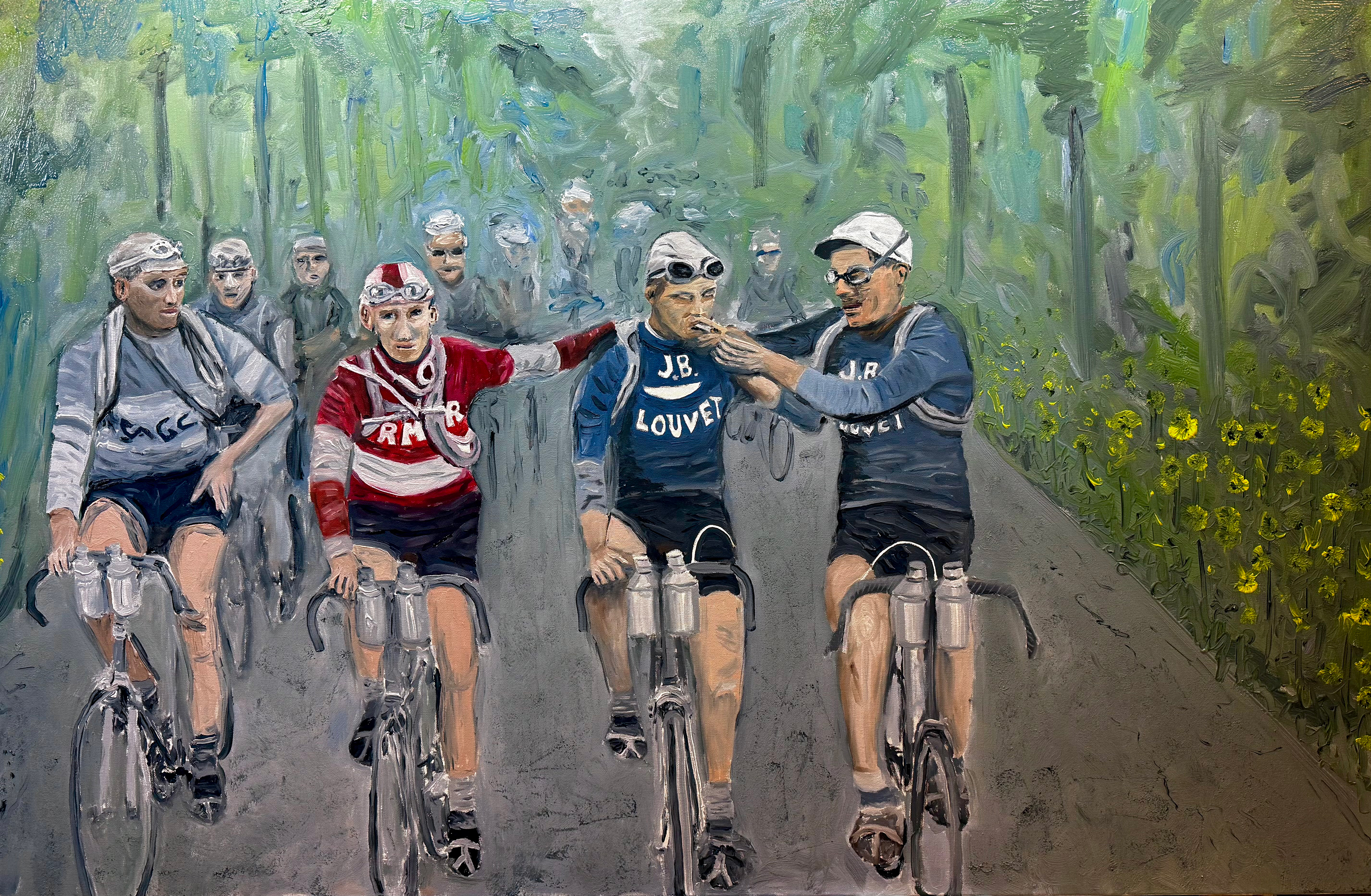
Tour de France - 1927 - Original Cycling Oil Painting by Christopher Watson
Original Cycling Oil Painting — Fine Art Prints Available
Medium: Oil on canvas — Year: 2026 — Size: 60.00″ × 40.00″
This is not a metaphor. This is what happened. The early Tours de France were not athletic events in any modern sense. They were endurance ordeals — stages of 300 kilometers or more over unpaved roads, ridden in wool jerseys through mountain passes and midsummer heat, sometimes through the night. Riders smoked during races. It was considered normal, even beneficial. The science hadn't caught up with the suffering yet.
J.B. Louvet was a Parisian bicycle manufacturer, one of dozens of small French firms that sponsored trade teams in this era, outfitting working-class riders who raced for prize money and whatever came after. Most of their names are lost now.
What this painting captures is something no photograph from that era quite manages: the casual, almost absurd humanity of it. The peloton pressing through a green tunnel of summer trees, and somewhere in the middle of it, two men sharing a cigarette at speed. Not despite the race, but during it. For roughly forty years, from the 1880s through the 1930s, the bicycle was the most consequential machine in ordinary life. These men weren't performing history. They were just riding. This painting is one of fifty.
Tour de France - 1927 is an original cycling Oil Painting by Christopher Watson. Available as archival fine art prints — a unique gift for cyclists and cycling enthusiasts. View Tour de France - 1927 — Browse the full cycling art collection — Shop cycling art prints for sale — Gifts for cyclists